
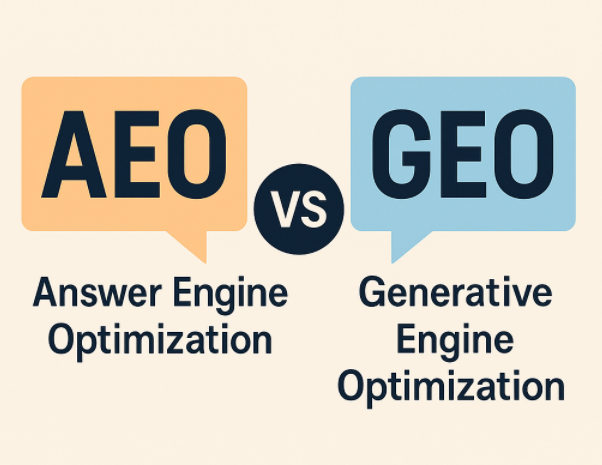
With the rapid development of AI technology, Answer Engine Optimization (AEO) and Generative Engine Optimization (GEO) have become increasingly important content optimization strategies. While these two terms differ, they are closely related in optimizing content and improving search engine performance.
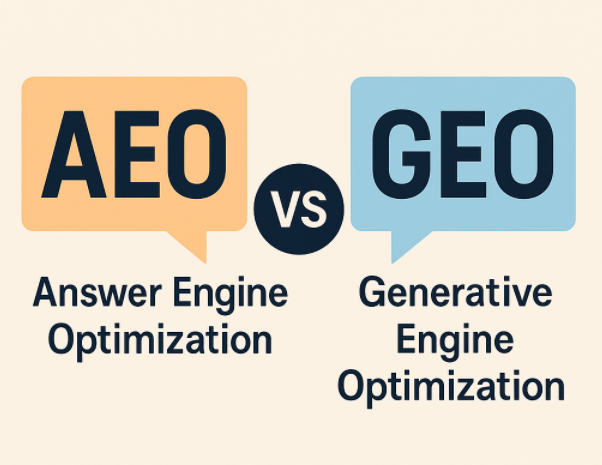
What is Answer Engine Optimization (AEO)?
AEO focuses on optimizing content so that it appears directly as an answer in search engine results, typically displayed in “featured snippets” or “answer boxes.” AEO emphasizes using structured data (such as schema markup) to help search engines extract content accurately and present it in a concise format.
The goal of AEO is to ensure that content quickly and clearly answers user queries, usually by appearing as a direct answer at the top of the search results page.
Key Features of AEO:
- Optimizing content through structured data.
- Targeting commonly asked questions or query-based content (e.g., “What is…”).
- Focusing on clarity and conciseness.
What is Generative Engine Optimization (GEO)?
GEO focuses on optimizing content to be effectively interpreted and generated by AI models (like GPT, Gemini, etc.). Unlike AEO, GEO is about ensuring that content adapts to the generative mechanisms of AI models, so that the content can be used to generate relevant, accurate text or responses.
The goal of GEO is to ensure that content is not only suitable for being extracted as an answer by search engines but also provides reliable input for generative AI to produce high-quality output.
Key Features of GEO:
- Focuses on content context and natural language processing.
- Optimizing content to provide valuable data for AI models like GPT, Gemini.
- Emphasizing depth and generability of content, not just simple answers.
Relationship and Differences Between AEO and GEO
Although AEO and GEO both aim to optimize content, they focus on different aspects and goals:
- Different Optimization Goals:AEO focuses on providing concise answers through structured content, optimizing it to appear in search engine answer boxes.GEO focuses on providing optimized content for AI generative models, enabling them to generate valuable and coherent text.
- Different Content Formats:AEO emphasizes structured content, such as clear FAQs, lists, or step-by-step instructions, for easy extraction by search engines.GEO focuses on content depth, coherence, and context, ensuring AI models can generate natural language output based on the content.
- Different Techniques Used:AEO primarily relies on structured data tags (like schema markup) to ensure content is easily extracted by search engines.GEO depends on the contextual relevance and natural language of the content, making it more suitable for AI model understanding and generation.
Conclusion
Although AEO and GEO are both content optimization strategies, they serve different technologies and goals. AEO focuses on meeting search engine requirements with concise answers, while GEO aims to provide deep content for generative AI to support high-quality automation.
Understanding the relationship and differences between these two strategies can help content creators and businesses optimize content effectively for both search engines and AI models.